
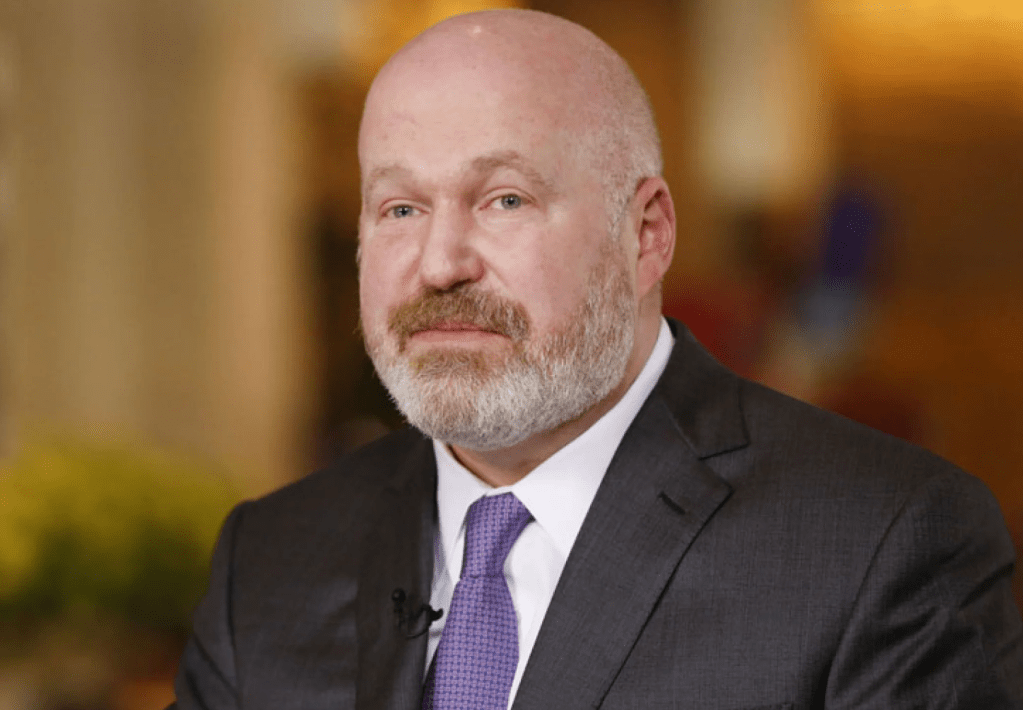
Cliff Asness would prefer you not talk about Peloton, the home exercise bike company whose stock soared beyond all rationality during the early days of Covid, when everyone worked — and worked out — from home. That period was one of pain for Asness and AQR Capital Management, the quant hedge fund he co-founded in 1998 just before an earlier tech bubble that, as he will tell you in mind-numbing detail, was an especially traumatic event for the firm’s value-oriented strategies.
“Peloton bothers me in two ways,” Asness offers. One might expect that statement to be followed by a wonky analysis about the value factor in quant investing that he is known for espousing. Instead, the repartee goes like this: “One, it brings back those memories of that period,” Asness says, referring to AQR’s drawdown in 2020. “And two, I use mine as a coat rack, so I feel kind of guilty when someone says ‘Peloton,’” he deadpans. (Asness confesses he gained weight during Covid because “eating is something you do when you’re losing a lot of money.”)
Humor is an Asness stock-in-trade, and it can be self-deprecating and savagely pointed at the same time, whether it’s directed at “hedge funds that don’t hedge,” the “volatility laundering” of private equity — or himself.
Of course, it’s easier to joke about bubble stocks like Peloton now that the 57-year-old fund manager is no longer losing money, but is making it handily. Perhaps a sure sign of the turnaround is that Asness was looking fit when Institutional Investor interviewed him in his sprawling office at AQR’s headquarters in Greenwich, Connecticut, last month. (He can see Long Island Sound — and avoid looking at the I-95 freeway — while sitting at his desk.) On the other side of the building is the Metro North railroad station, convenient for all the reverse commuters who pour into AQR’s office and those of several other hedge funds in the same building.
During the tough years, Asness kept telling anyone who would listen that the funds would bounce back because value investing was going to recover — which it ultimately did. During the past three years, AQR’s top strategies had double-digit returns, and 2024 looks to be another winner.
For example, following a more than 30 percent decline from the peak in 2018 to the trough in 2020, AQR’s flagship Absolute Return fund had a blowout year in 2022. It rose 43.5 percent, the best performance since launch in 1998. The Absolute Return Fund’s comeback started at the end of 2020. In 2021, it gained 16.8 percent, and last year it jumped 18.4 percent and became the top-performing multistrategy fund among its peers. This year, it climbed 10.8 percent through August, according to someone familiar with the results.
“Cliff absolutely is a survivor,” says Michael Trotsky, chief investment officer of Massachusetts Pension Reserves Investment Management, which has been an AQR investor for 15 years and now has about $1 billion invested in two of the firm’s funds. “He and AQR believe in value, and being a long-term believer in that style is a rarity these days.” Trotsky calls Asness “a big bright light” in the investment landscape.
“We are hard to kill,” quips Asness.
You can read my entire profile of Cliff Asness here: https://www.institutionalinvestor.com/article/2dqsr456gmu55p19gxiio/corner-office/cliff-asness-has-steered-hedge-fund-aqr-through-not-one-not-two-but-three-quant-crises
 Michelle Celarier
Great article!
LikeLike